Website SEO · 2026-09-19 · 7 min read
SEO Foundations for Creative and Animated Websites
A visually ambitious website can rank well, but search engines need clear pages, useful information and reliable performance. Treat SEO as part of the product structure rather than a final plugin.
Written and reviewed by Scrollhaus Editorial. Sources and methodology are documented in the article.
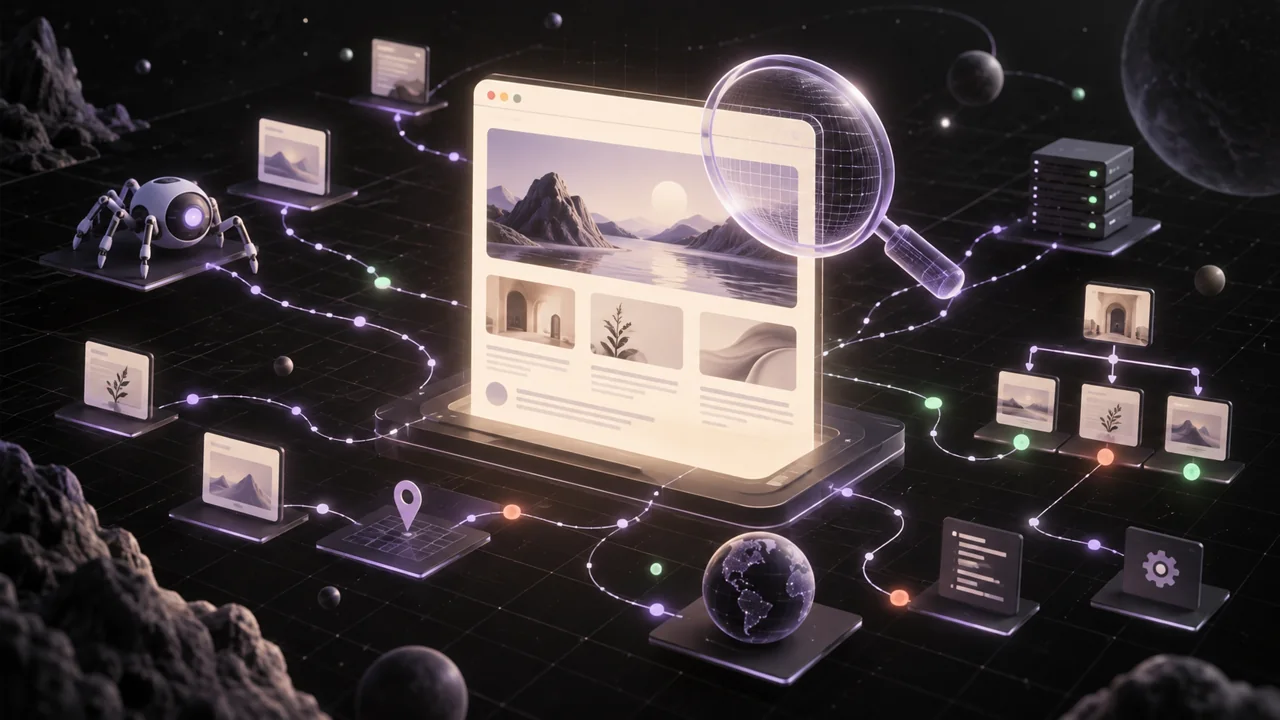
Key takeaways
- Create one page for each topic you can answer deeply.
- Every article needs a stable URL, unique title, accurate description and canonical link.
- Compress images and videos, set width and height, preload only the most important asset and avoid running expensive effects before they enter the viewport.
Give every search intent its own useful page
Create one page for each topic you can answer deeply. A focused article about animated landing pages is easier to understand and rank than a homepage trying to target every design keyword.
Use the phrase people search for in the title and introduction, then write naturally. Cover the decisions, examples and mistakes a reader actually needs.
Make pages easy to crawl
Every article needs a stable URL, unique title, accurate description and canonical link. Add internal links from the blog index and relevant product pages.
Maintain a sitemap and allow public editorial pages in robots.txt. Structured Article data gives search engines clearer authorship and publication context.
Protect Core Web Vitals
Compress images and videos, set width and height, preload only the most important asset and avoid running expensive effects before they enter the viewport.
Creative direction should not block the first useful content. Let the headline and article copy render immediately, then enhance the experience.
Build topical authority over time
Publish clusters rather than unrelated posts. A central guide to AI website design can link to focused articles about Figma handoff, GSAP motion, prompts, performance and conversion.
Update older articles when your process changes. Consistent useful publishing matters more than stuffing a page with repeated keywords.
Measure what leads to business
Track impressions, qualified clicks, newsletter or community joins and product conversions. Ranking alone is not the goal if the visitor cannot find the next useful step.
Connect educational content to the template library and community only where it helps the reader continue. Helpful internal paths outperform aggressive calls to action.
Render meaningful content outside the animation layer
Search engines and visitors need the main heading, explanations, links and actions in the document. Canvas, WebGL and video can enhance that content, but they should not be the only place where the story exists.
Use semantic headings in order, descriptive anchor text and useful image alternatives. A dramatic visual can be accompanied by concise copy that explains what the visitor is seeing and why it matters.
Connect articles into deliberate topic clusters
A strong cluster has one broad guide and several focused answers. For Scrollhaus, animated website templates can connect to 3D websites, scroll animation performance, AI website prompts, Figma handoff and client production. Each page should answer a different question and link to the next logical step.
Avoid creating several pages that all chase the same phrase. Overlapping pages make it harder for search engines to choose the best answer and harder for readers to understand where to begin.
Use Search Console as a feedback loop
Submit the XML sitemap, inspect newly published URLs and monitor which queries produce impressions. Early impressions reveal how Google interprets the page, even before clicks arrive. Use that evidence to improve titles, missing sections and internal links.
Do not rewrite a page every day. Give crawlers time, compare several weeks of data and improve content when you can make the answer meaningfully better. Search visibility compounds through useful pages, trusted links and consistent technical quality.
Frequently asked questions
Can animated websites rank on Google?
Yes. Keep meaningful content crawlable, use stable URLs and metadata, compress media and protect Core Web Vitals.
Does Google understand content inside WebGL or canvas?
Do not rely on it. Put the main headings, explanations, links and actions in semantic HTML and use canvas as enhancement.
How often should an SEO article be updated?
Update it when product facts, search intent or your process changes enough to make the answer materially more useful.
Explore animated website templates at Scrollhaus →
Need help with a template, account, or project? Email admin@scrollhaus.ai.