AI Website Templates · 2026-09-20 · 7 min read
Best AI Website Template Libraries: What to Look For Before You Build
The best AI website template library does more than give you a polished screenshot. It shows how the page behaves, gives your coding assistant enough context to recreate it and leaves you with a site you can maintain after launch.
Written and reviewed by Scrollhaus Editorial. Sources and methodology are documented in the article.
Key takeaways
- A large catalogue can help discovery, but quantity does not tell you whether a template is useful.
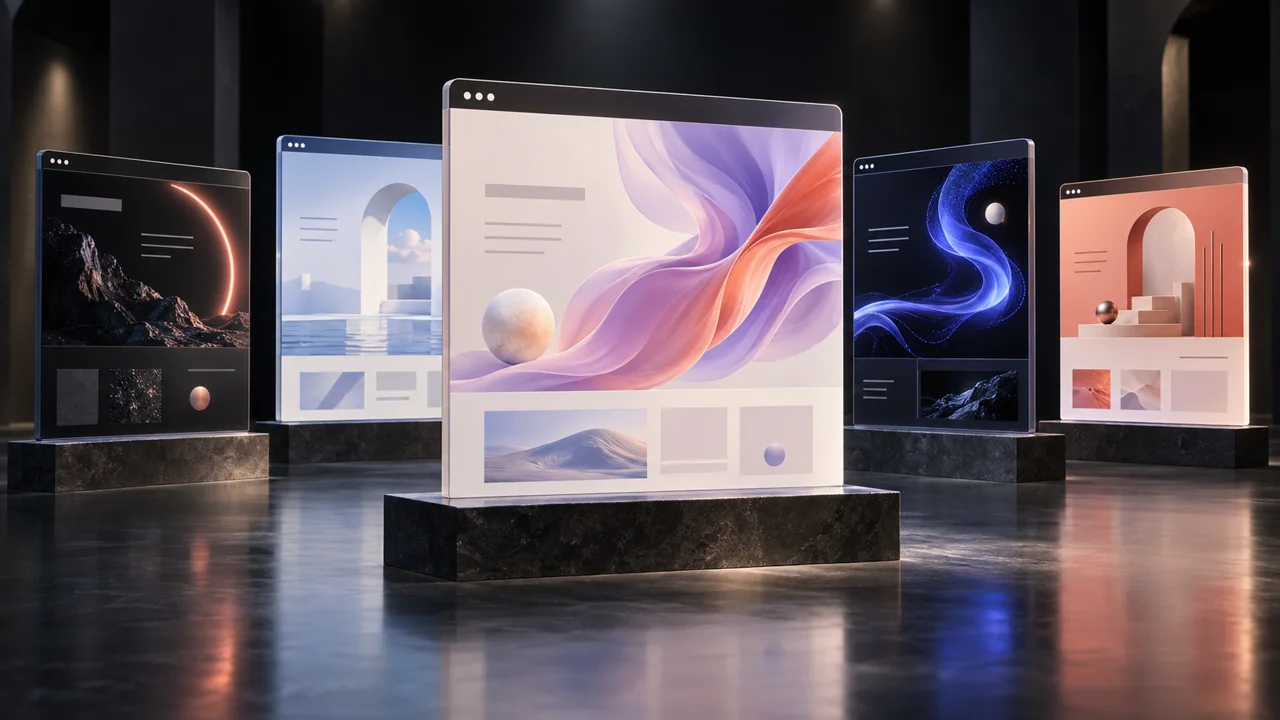
- A still image cannot reveal scroll pacing, hover behavior, mobile transitions or the point where an effect becomes distracting.
- Some libraries sell prompts, some provide code, and some provide both.
Start with the outcome, not the template count
A large catalogue can help discovery, but quantity does not tell you whether a template is useful. Begin with the kind of outcome you need: a conversion landing page, a portfolio, a cinematic product story, an ecommerce concept or a reusable section.
MotionSites emphasizes ready-to-use animated prompts, Jiro focuses on a broad prompt and component library, and GetLayers combines templates with scenes, gradients and interactive layers. Scrollhaus is built around live motion previews plus portable source and build instructions. These are different starting points, even when the catalogues appear similar.
Demand a real live preview
A still image cannot reveal scroll pacing, hover behavior, mobile transitions or the point where an effect becomes distracting. Open the live preview and use the page as a visitor would. Check the navigation, calls to action, content rhythm and reduced-motion behavior.
A useful preview should represent what you receive. If the preview relies on assets or interactions that are missing from the copied version, the template creates more rework than it saves.
Check what the AI actually receives
Some libraries sell prompts, some provide code, and some provide both. A prompt is portable across tools and easy to customize, while source code can preserve exact details that a model might otherwise reinterpret. The strongest package explains the layout, motion, typography, assets and responsive rules together.
Look for explicit support for the tool you use, whether that is Lovable, Bolt, Claude Code, Codex, Cursor, Replit or another builder. Also confirm whether the deliverable is a complete landing page, a single section or a visual reference.
Evaluate performance and ownership
Animated pages need more than visual polish. Inspect video sizes, poster images, font loading, layout stability and mobile behavior. Heavy media should be compressed, dimensions should be reserved and essential content should remain readable before animation starts.
Read the licence before using a template for client work. Confirm whether commercial projects are allowed, whether attribution is required and whether hosted assets can be moved to your own infrastructure. A reusable starting point should not become a long-term dependency you did not expect.
Choose the library that reduces uncertainty
The practical value of a template library is the number of decisions it removes without limiting your ability to change direction. A good starting point lets you understand the final feeling, reproduce it reliably and then replace the brand, copy and content with your own.
Use the free examples first. Rebuild one page in your normal workflow, test it on a phone and measure how much correction it needs. That small trial tells you more than a feature list about which library will help you ship consistently.
Compare customization depth, not only visual variety
Ask how far the template can move away from its demo. Good source exposes design tokens, components and content structure clearly enough to change the brand without fighting scattered values. A prompt-only product should explain layout and behavior precisely enough to create a stable first build.
A catalogue is more valuable when several directions share a reliable production standard. Consistent responsive behavior, accessibility and asset handling matter more than whether every cover image looks different.
Check support, updates and the exit path
Review how the provider handles broken previews, browser changes and library updates. Confirm whether documentation and support remain available after purchase. Templates that depend on a private service should explain what happens if that service changes.
The safest option gives you an exit path: downloadable source, replaceable hosted assets and clear instructions. Portability protects client work and keeps your website maintainable after the initial build.
Run a short purchasing test
Choose one free or low-risk example and reproduce it in your preferred AI builder. Measure the time required to match desktop, mobile and motion. Note every missing asset, vague instruction and manual correction.
That test converts marketing promises into evidence. The best AI website template library for your team is the one that repeatedly shortens the path to a production-quality result, not simply the one with the largest number on its homepage.
Frequently asked questions
What should an AI website template include?
A useful template provides a real preview, clear responsive behavior, documented assets and either portable source, an accurate prompt, or both.
Are live previews important?
Yes. They reveal scroll pacing, hover states, mobile behavior and performance that a thumbnail cannot show.
Can AI website templates be used for client work?
Only when the licence permits commercial use and all fonts, images, video and other assets are cleared for that project.
Explore animated website templates at Scrollhaus →
Need help with a template, account, or project? Email admin@scrollhaus.ai.